The Fed now needs to support the labor market, and that means treating housing as an industry to boost rather than suppress.
It’s been clear since the fall of 2022 that the housing market needed lower interest rates to fix many of its problems including a lack of affordability for buyers, the mortgage rate lock-in dynamic for homeowners, and reduced activity for companies ranging from Home Depot Inc and Lowe’s Cos to suppliers of building materials.
But the Federal Reserve was more focused on containing inflation than helping the housing market. No more. Economic data over the past few months have shifted policymakers’ priorities, with investors expecting the first of several interest rate cuts in September. The Fed now needs to support the labor market, and that means treating housing as an industry to boost rather than suppress, and using its health to gauge whether monetary policy has been eased enough to hold the economy in balance.
Story continues below Advertisement
It’s not that the labor market is an immediate problem. What’s concerning is its direction. The unemployment rate has risen for three consecutive months — the first time that’s happened in eight years — and at 4.1% stands around the Fed's longer-term forecast. If it was likely to stay at 4.1%, the Fed could have confidence that the economy was in balance, but all signs point to a continuing deterioration — something Chair Jerome Powell doesn’t want to see.
Worries about a recession in 2023 and sluggish demand this year have made businesses reluctant to add workers even as the labour force continues to grow. The goal of monetary policy should now be to change all this — lower interest rates will boost demand and, in turn, spur hiring, consumer confidence and spending.
All this brings us back to the housing market, the most obvious place for lower borrowing costs to work their magic. Existing home sales are running at a rate that’s 25% below what should be considered normal; owners are sitting on record levels of home equity that they won’t access until rates are lower; and housing-related industries ranging from remodeling to furniture to freight have been in downturns since 2022.
Story continues below Advertisement
An increase in transactions would mean more work and commissions for real estate agents, loan officers and workers associated with moving. They would likely unlock home equity between mortgage refinancings and home sellers spending some of their capital gains, powering consumption. Furnishing sales are highly correlated with transactions, too, so we can expect demand to improve for home goods retailers, the factories that supply them and the railroads and trucking companies that transport goods.
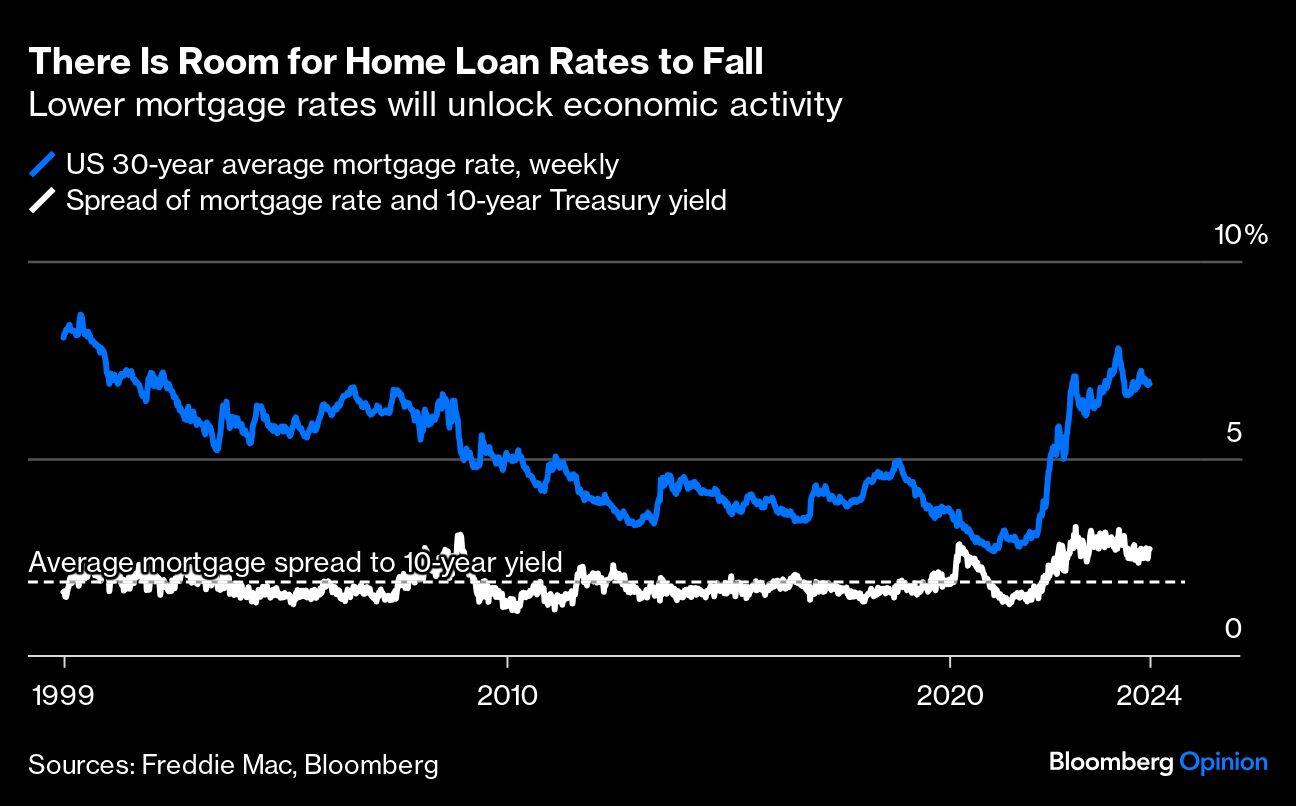
The key question is what level of the fed funds rate and mortgage rate would set this process in motion. One of the largest homebuilders in the US, Lennar Corp., said on its earnings call last month that mortgage rates of approximately 6.75% “felt constructive” in the prior quarter. Home loan rates a bit lower than that in January, around 6.6%, translated into a pickup in sales of previously owned homes the following month. But that’s generally a slow time of the year for housing so it didn’t give buyers much time to act. My guess is that a 6.5% mortgage rate, which we haven’t seen since May 2023, would be enough to get housing going again to some extent.
Story continues below Advertisement
Numerous factors will influence how Fed easing flows through to home loan rates, which track yields on 10-year Treasury bonds. With inflation fears contained and markets pricing in a couple of cuts this year, 10-year yields have fallen nearly a quarter of a percentage point since July 1. The 30-year mortgage rate dropped to 6.81%, the lowest since early February, from 7.14% at the start of the month, according to Mortgage News Daily. Even if 10-year yields don’t go much lower, there’s room for mortgage rates to fall below 6% if the spread between the two returns to levels seen through most of the 2000s and 2010s.
The key will be watching how quickly Fed easing drives down mortgage rates and flows through to the economy and employment. If mortgage rates at 6.5% don’t revive housing transactions and the labour market, then the Fed will probably need to do more. Ultimately, policy easing should stabilize the labour market given how depressed rate-sensitive industries such as housing are right now. Still, we won’t know for sure how many cuts it will take until the process is underway.
Credit: Bloomberg











Comments
Post a Comment